
Dear Designer,
I’m on a number of design-related Slack channels and I am most upset and unsettled when I see following message.
“It’s been six (or eight or 12 months) and I cannot for the life of me find a job in this design profession.”
Most of the folks posting this are either young and right out of school or they have 2 or 3 years of experience working at an agency or doing in-house work.
If there are three designers per month with this kind of message, there are probably 3,000 others experiencing this same challenge. Behind each of these messages is a person who is questioning their worth, their educational path, their capacity to contribute and their future growth.
These are designers who are doing what they are supposed to do: applying to jobs on LinkedIn and Indeed and reaching out to agencies and corporations on their respective websites.
They are either getting no responses after submitting their resumes or they receive a kind email explaining that they will hear back if the organization is interested.
In some cases, AI is doing the actual vetting and job applicants are receiving emails three seconds after sending their resume with a response of “your experience does not meet the needs of the advertised position.”
What does it mean to be a young designer in this moment? How does one think about their purpose having done “all the right things” by going to school and getting good grades and working days and nights to build a portfolio?
It’s all very upsetting
I’ve been designing for 25 years and I have been relatively fortunate. (For transparency, as a founder, I have also had the privilege of sleepless nights, panic attacks, stick handling law suits and dealing with negative cash flow, but those are for another time.)
Over my career, there has been incredible forward momentum. Moving from print to brand to HTML to mobile to content management to collaboration, design has provided an overall upward trajectory for me and many of us weirdos.
With the rise of automation and AI, will this trend continue? Will we see designers suffer or soar?
I think we will soar.
Design — defined for our present purposes as an application of visual and technical tools for digitally communicating information — will continue to grow and we will continue to need highly talented, committed, skilled and ethical designers to fill the ranks.
There will continue to be websites, applications, platforms, systems and brand ecosystems to craft, build and maintain. We will increasingly need UX designers to think strategically about crafting thoughtful, engaging and unique digital solutions that can be coded by machine, by others or by themselves.
And yet you will be okay
The upward trend line that we have seen for the past half century will continue skyward. But it will be more measured, modest, and clearly defined by an increasingly rationalized market for digital products and systems.
How do I know this? Let’s look at the markets. Figma, the tool of trade that most designers are embracing, went IPO last week. Buyers are generally bullish. Adobe’s stock continues to advance, despite me not liking Adobe. Squarespace has a 3% share of the global CMS market. Many newish content management and builder tools (some with no-code) are growing online — Framer, Canva Sites, Super, and Carrd are all holding their own.
Yes, these products are ostensibly made so that the average person can make a site in a day. But remember that that is not your audience. The growth of Ikea does not mean that we no longer need carpenters.
So how do I get a job, dude
Right, that’s the question.
And here is my answer. Don’t.
I know that sounds super annoying and uber-privileged. But I do mean it.
Don’t get a job. Don’t bother applying for jobs right now. Don’t waste your precious time sending out your portfolio to yet another faceless company.
Applying and getting summarily rejected is a recipe for growing frustration and gnawing self-doubt. It will only lead to further feelings of insecurity and disgust, when in fact, you’re a talented designer.
You are. You came this far in design and you will shine.
Go it alone, for now
You need to eat. And I want you to eat.
More importantly, the world needs you to make the art of the everyday. We need strong, talented, clear-headed designers to make a difference in this world.
For anyone either unemployed, just out of the education gate, or thinking about switching job, I encourage you to think differently about this crazy market.
And my recommendation is this: go it alone.
Forget about working for a company. At least for now. Companies will come and go. They will hire and fire. An agency will build products and then decide they are suddenly switching platforms. A studio will obtain a big new client and that client will go bankrupt. A nonprofit will need communications help and then lose their federal funding. A major corporation will downsize their comms team as soon as the economy turns a tiny bit yellow or they figure out how AI works.
Going it alone doesn’t mean going lonely
I know that going freelance may not be for everyone. You want a solid floor under you. Benefits. Colleagues. Lunch. Snack. Drinks out.
Those design jobs do exist and will continue to exist but they will be less plentiful and you’ll be subject to the whims of the economy.
Instead, make a go of it on your own.
Become an incredibly valuable designer that other people want to hire to build amazing things. You can give it whatever name you want: freelancer, solopreneur, contractor, founder, owner, provider or worker.
You can be a graphic designer, graphic artist, user experience strategist, web developer or just plain old designer.
Redesign your career so that you can work as a sole contractor with agencies, developers, businesses, nonprofits or other designers and continue to build out your portfolio and resume. You have the opportunity to gain more work, wealth and wisdom.
There is freedom in freelance.
In the next issue of Dear Designer, I’ll explain more about how you might start thinking about this in detail.
Yours,

Image of the Week
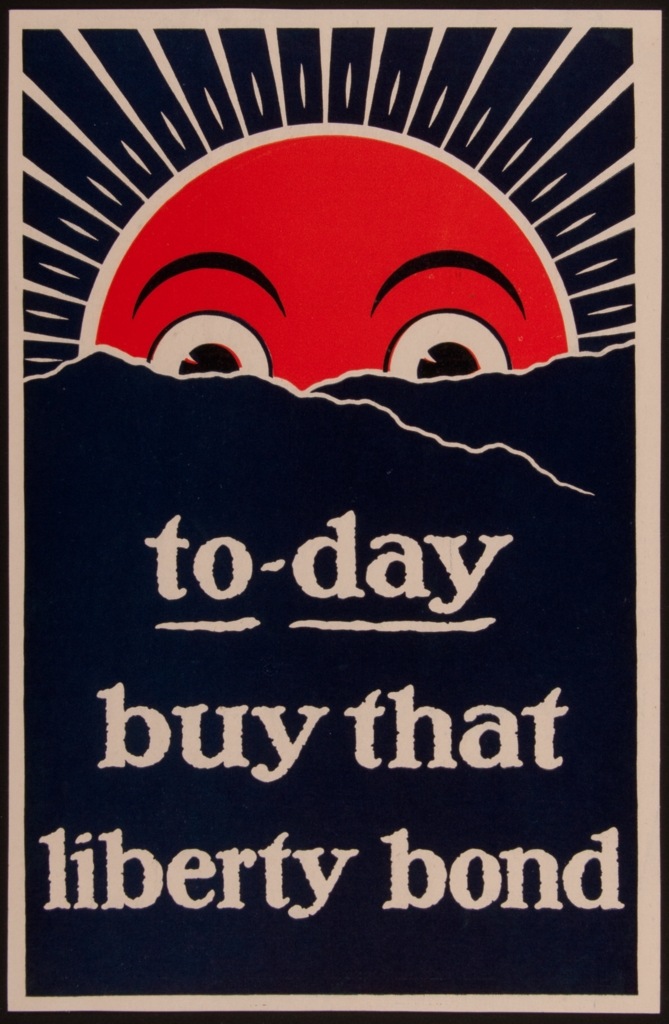
In the First World War, design was leveraged by governments to attract soldiers to the war front, rally citizens in the U.S. and Europe to the war effort, and bring in new money (“liberty bonds”) to support the war machine. The birth of modern-day propaganda is directly tied to the advantages that mass communications and super design offers the state and its subsidiaries. This is a beautiful poster designed by a ninth-grader in 1918 in a public contest. The artist, Kathleen Walsh, was featured in the Boston Globe on September 23, 1918, only six weeks before the war’s end. The poster feels honest and young, with its lowercased letters and sunrise eyes. I especially love the hyphen used in “to-day”.
Quote of the Week
The future cannot be predicted, but futures can be invented.
~ Denis Gabor
Thank you for reading, dear designer. Wishing you a good, happy week ahead. And please leave a comment if you like.
If you want to subscribe to this newsletter, here is a button.