
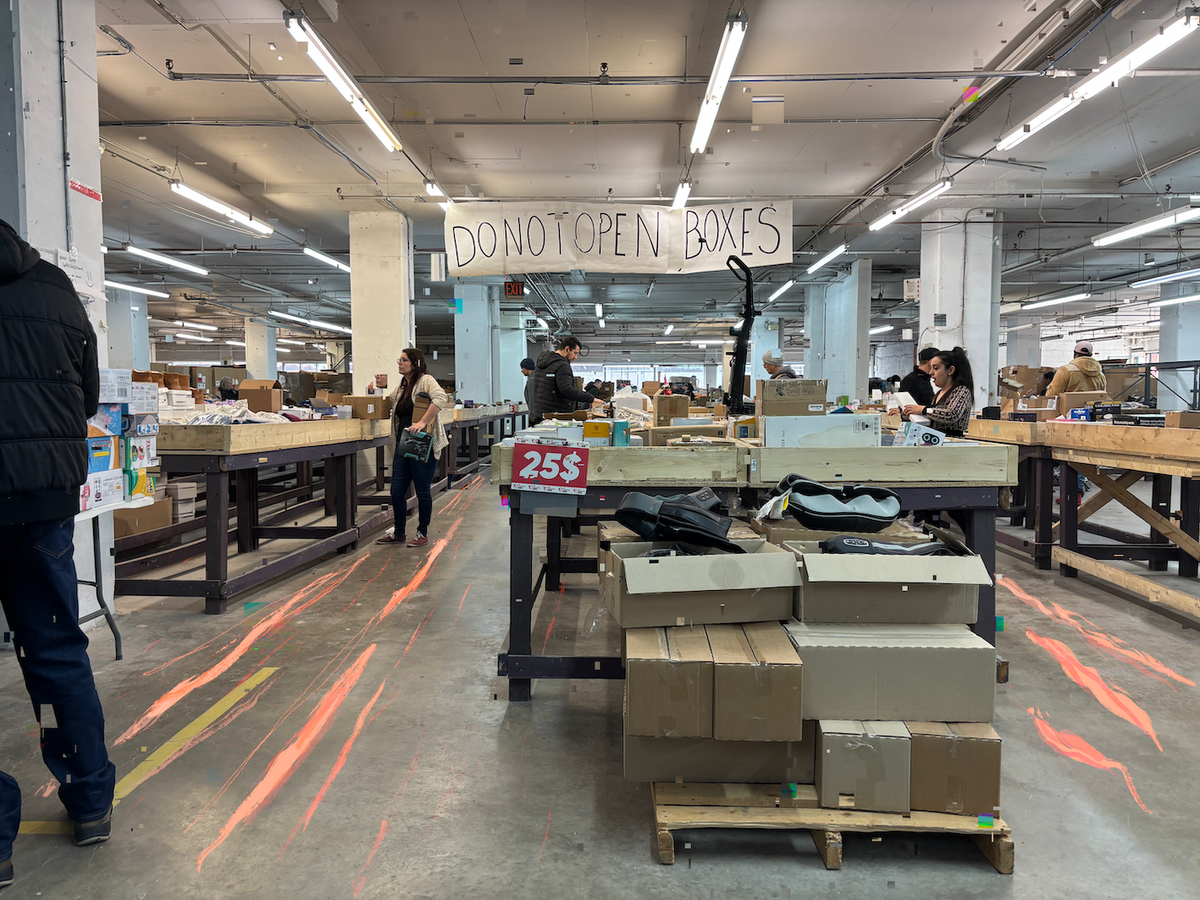
Back in the early days of Covid when we watched parts of New York City fill up with refrigerated trucks, when sirens made you sit up twice, and when news dripped with dread, we learned about where our food came from.
Turns it out it was farmers and factories. We also learned about the people who stocked our store shelves with toiler paper, the folks who went to work to bake our bread and make our meat, and the nurses and doctors that risked their lives to keep us healthy. We called them essential workers because they were.
They still are.
It’s easy to forget just how amazing and how amazingly fraught our social infrastructure is. We already have.
At the end of February 2020, I was on a week-long visit to New York and Philadelphia to visit friends and family with my daughter. We were everywhere — on subways, at museums, with friends, in restaurants. Ten minutes into the news broadcasts there were stories about a virus in Wuhan and the thousands of people getting sick. But that was China. Experts and many reporting journalists said that it will probably be under control by the time it comes to North America.
When we got back to Canada, my daughter was incredibly sick, having a very difficult time breathing. She was afraid to go to sleep because she didn’t know if she would wake up again. We thought it was a bad flu. She recovered, thank G-d.
I got sick about a week later, landing me in the ER. I recovered, too, and I was never more thankful for those essential workers that came for me — the emergency responders in their gleaming white beautiful chariot ambulance.
All of this is prologue to the question: Are designers essential workers?
I am asking this question because there is the potential for another highly disruptive vector of collective change approaching us soon. It could be avian flu, accelerated climate disasters, or variable social unrest. And it may be artificial intelligence and its lovely new agentic form that is vectorized.
I take all Silicon Valley pronouncements with three tablespoons of salt and two of apple cider vinegar, but last week Dario Amodei, CEO of Anthropic and the maker of Claude, said that AI could wipe out 50% of all entry-level white-collar jobs and create unemployment of 10 to 20% in the next couple of years. There are signs that LinkedIn and other job sites are experiencing declining job listings.
Amodei says:
Cancer is cured, the economy grows at 10% a year, the budget is balanced — and 20% of people don't have jobs.
He goes on that governments are not talking about it, apparently afraid of their own shadow.
Perhaps politicians are concerned about inadvertently panicking people and are frightened that whatever steps they take now will be incorrect, or worse, will ultimately undermine more useful responses to come. Perhaps, they are not worried, as that predicted future is still years away.
Designers are white-collar workers, despite the fact that many have emerged from blue-collar families.
So, if the government wants to stay ahead of this, what should they be doing for white-collar workers — and for us, dear designer?
And do we even deserve government support?
In other words, are we essential?
On a now-archived page of the Canadian Government website, the National Strategy for Critical Infrastructure classified essential workers according to these ten sectors during Covid-19:
- Energy and Utilities
- Information and Communication Technologies [bold mine]
- Finance
- Health
- Food
- Water
- Transportation
- Safety
- Government
- Manufacturing
If this list still stands, slightly more than five years after the virus’s hellacious entrance on the world stage, are we designers still in that second category?
We take information and communicate it to others using technology, right?
We do. But what if AI is doing that? Then how essential are we designers to the “health, safety, security or economic well-being of Canadians and the effective functioning of government”?
I’m going to go out on a limb and say that, if Amodei is right, most of us will not be deemed essential.
—
I asked the AI what it thought about all of this and how it would finish the essay. Having used the various chat GPTs over the past few years, I now consider AI to be almost autonomous and nearing sentience, if not consciousness. (More about this another time.)
More importantly, I didn’t like the answers the specific GPT gave me. It was not because I think it was wrong — but because I think it was right.
In a voice that sounded eerily like my own, I got this.
We might not be essential workers, but we can choose to do essential work. Not all design is equal. Making another optimized landing page for a shady crypto startup isn’t the same as designing accessible interfaces for government services or climate resilience tools. We get to decide whether we’re doing essential work — even if we ourselves aren’t officially recognized as such.
And this.
Let’s redefine “essential” on our own terms. If governments won’t include designers in their lists, maybe that’s fine. We can build our own definitions — rooted in service, sustainability, equity, and care.
But the AI was too much for me. It’s techno-optimism feels hollow — like it found a way to unwittingly gaslight me.
We are not all going to be just fine. Most of us will. Not all. The AI is too powerful and too fast to paper over the cracks in our economic infrastructure.
There is a grief here about our livelihoods and our work, our professional friendships as well as our capacity to understand.
But as Jim Morison once said, “No one here gets out alive.”
It can all be better than this
So this is what I want to say.
Maybe you were not born on this planet to be a “Social Media UX Design Lead” or a “Data-Driven Interface Experience Director” or a “Digital Analog Board Designer ” (a real post).
Maybe, just maybe, your parents came together to give you this life so that you can be a force in other ways. To be a small yet gleaming star. To be a kind soul to every person you meet and to change their lives. To course correct just one person, shifting their unique momentum toward new perspectives and possibility.
Maybe, just maybe, we weren’t meant to pay city, state, provincial, sales and federal taxes as well as an accountant to file those taxes. (I am pro-distribution of wealth but our tax regime is byzantine). Maybe we weren’t meant to pay Google for Gmail. Or to focus on personal productivity systems. To make coloured buttons in Figma. To click. Even to type. To be part of a machine that fascinates to distract and that orients towards anxiety.
Maybe we were meant to be imperfectly perfect, the way you are now.
I know this alternative calculus for our individual design lives doesn’t pay the bills.
It’s incredibly hard to think that design may not be there as a profession for us. I still think it will — for many. But the odds are that the profession will change dramatically, again.
Remember, there were thousands of paste-up artists in newsrooms in the 1950s and 1960s. They took printouts from others and put them into action, pasting them into place to create newspapers that were distributed to millions. There were also thousands of Linotype operators who sat in front of their huge 90-character keyboards every day in order to set in type all the news that was fit to print.
I’m not making excuses for the techo-optimists, our AI overloads. They can afford to be utopian because the levers are in their hands, in the same way that all owners of capital have felt.
But if there is a great hollowing (warning — click link only if you have time to descend quickly), perhaps a new social order will emerge that is better, more humane, more local, more free — and less administrative, less extracting, less unjust.
No social arrangement stands long. But what took hundreds of years to change previous to the 19th century is now taking jut dozens of months or even weeks.
We are not built for breakneck speed, designers and artists especially. We are witnesses to warnings and there is a lot we can do to mitigate and manage — but also much that we cannot.
We need solidity and calm and also time to craft and to cry.
Truly,

Image of the Week
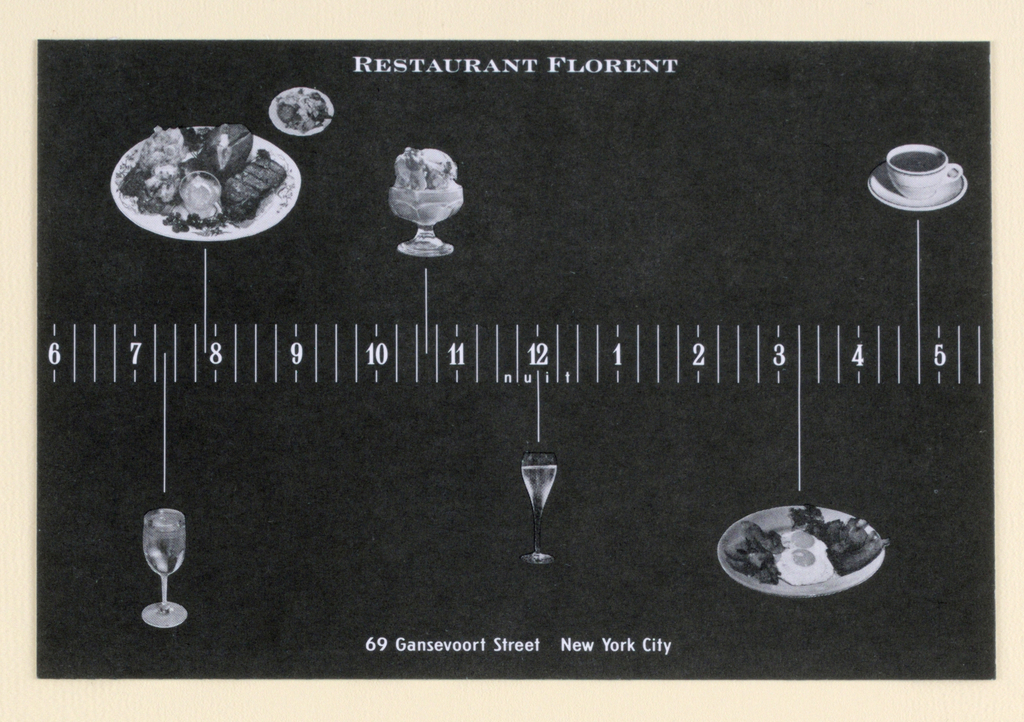
So many postcards. In the 1980s and 1990s, before email newsletters and social, we had printed matter. This is a brilliant postcard by Emily Oberman, who once worked for Tibor Kalman’s agency M & Co. and who now is at Pentagram. Florent was located in the meatpacking district of Manhattan back then and was considered by New York Magazine as the “hottest downtown eating spot” and a key spot for many New Yorkers in the gay community. If the design of the place was anything like the design of the postcard, it must have been fantastic. Whether Florent was open at 4:30 am for coffee — that I do not know.
Quote of the Week
None of us are getting out of here alive, so please stop treating yourself like an after thought. Eat the delicious food. Walk in the sunshine. Jump in the ocean. Say the truth you're carrying in your heart like hidden treasure. Be silly. Be kind. Be weird. There's no time for anything else.
― Nanea Hoffman
Note: if you seek a Quote of the Day, may I suggest my new TypeQuote?
Would you mind sharing this with a designer or artist friend? I am trying to get to 1,000 subscribers, after which something will surely happen!
If you would like to subscribe now you can do that here, too. Thank you.